

Total: MRP Rs.0
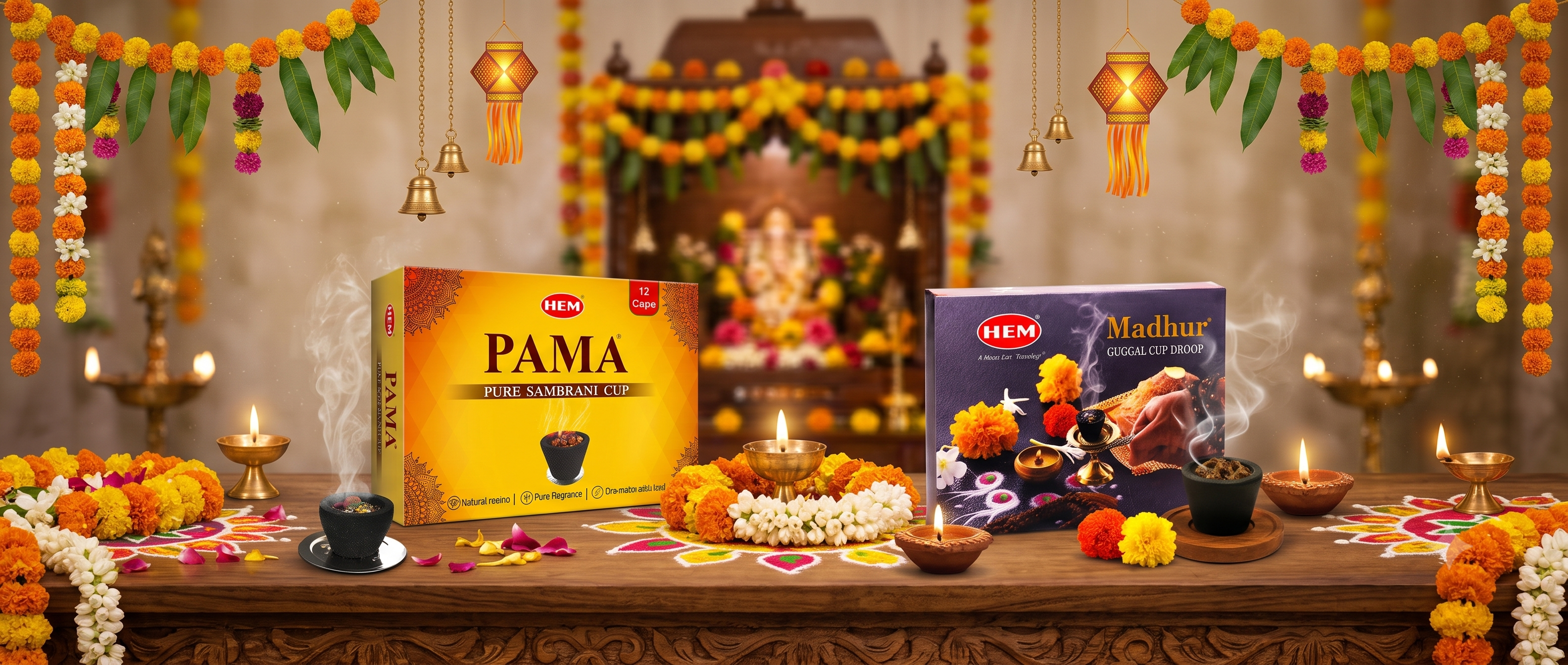
Sambrani Dhoop Cups: Meaning, Uses and Festival Guide
The deep, resinous fragrance of Sambrani has been part of Indian pooja traditions for generations. From everyday morning prayers to elaborate temple ceremonies and festive aartis, its distinctive aroma helps create a traditional and devotional atmosphere.
Today, ready-to-use Sambrani dhoop cups make this age-old fragrance ritual easier to include in modern homes. Instead of arranging loose resin and charcoal separately, a dhoop cup offers a convenient format that can be lit and placed safely on a heat-resistant incense stand.
In this guide, we explore what Sambrani is, the difference between Sambrani and Loban, why dhoop cups are popular for pooja, how to use them safely, and how they can be included in your Ganesh Chaturthi 2026 puja and Diwali 2026 Lakshmi Puja preparations.
What Is Sambrani?
Sambrani generally refers to a fragrant natural resin traditionally burned during pooja, aarti and other devotional rituals. It is known for its rich, warm, balsamic and slightly sweet fragrance.
The resin commonly associated with Sambrani is benzoin, which is obtained from trees belonging to the Styrax family. Benzoin resin contains naturally occurring aromatic compounds such as benzoic acid, cinnamic acid, benzaldehyde and benzyl benzoate, although the precise composition can vary depending on the species and origin of the resin.
When heated, the resin releases a dense and recognisable fragrance. In Indian households, this fragrance is traditionally associated with:
- Daily pooja and aarti
- Temple-style fragrance rituals
- Preparing a prayer room before worship
- Festival ceremonies
- Meditation and quiet reflection
- Creating a traditional ambience at home
These uses are based on cultural and fragrance traditions. Sambrani dhoop should not be presented as a medicine or as a substitute for medical treatment.
What Is a Sambrani Dhoop Cup?
A Sambrani dhoop cup is a ready-to-light incense format containing fragrant resins and a combustible base shaped into a small cup.
Once the outer surface is lit correctly, the cup gradually releases fragrant smoke. Depending on the product, one cup may burn for approximately 12 to 15 minutes while its fragrance can remain noticeable for longer.
Dhoop cups are especially useful for people who enjoy a stronger, more traditional fragrance than a regular incense stick but do not want to handle loose charcoal and resin separately.
Sambrani vs Loban: What Is the Difference?
The words Sambrani and Loban are often used interchangeably in different parts of India. However, the exact meaning may differ depending on local traditions, product formulation and the type of resin being used.
| Feature | Sambrani | Loban |
|---|---|---|
| Common meaning | A traditional fragrant resin or resin-based dhoop | A general term used for fragrant resin incense |
| Fragrance character | Warm, sweet, balsamic and temple-like | Resinous, earthy, woody or balsamic |
| Common format | Loose resin, cups or resin mixtures | Loose resin, cups, granules or blends |
| Popular use | Pooja, aarti, meditation and festive rituals | Pooja, home fragrance and ceremonial use |
| Product variation | May contain benzoin or blended natural resins | May refer to different resin blends regionally |
When purchasing either product, check the fragrance description and ingredient information rather than relying only on the name.
The Fragrance Science Behind Sambrani
Sambrani is valued primarily for its aromatic experience.
Benzoin resin naturally contains aromatic acids, esters and other fragrance compounds. When the resin is heated, these materials contribute to its characteristic sweet, warm and balsamic scent.
There is also a recognised connection between smell, memory and emotion. Odour information is processed through pathways closely connected with brain regions involved in memory and emotional responses. This is one reason familiar fragrances can become strongly associated with childhood, family traditions, temples, festivals and personal prayer routines.
Some laboratory studies have examined the biological properties of benzoin extracts and individual resin compounds. However, such findings should not be interpreted as proof that burning Sambrani disinfects a room, purifies indoor air or treats health conditions.
Sambrani is best described as a traditional fragrance product used to support a devotional and aromatic atmosphere.
Why Are Dhoop Cups Popular for Temple-Style Fragrance?
Not every temple follows the same incense practice, but resin-based dhoop remains popular in many devotional settings because it produces a fuller fragrance experience.
1. Richer fragrance diffusion
A dhoop cup generally releases a deeper and more noticeable fragrance than a thin incense stick. This makes it suitable for larger prayer rooms, festival gatherings and aarti ceremonies.
2. Convenient ready-to-use format
Traditional resin incense may require separate charcoal, tongs and loose resin. A ready-made cup brings these elements into one compact format.
3. Suitable for short rituals
Many dhoop cups burn for approximately 12 to 15 minutes, making them convenient for morning pooja, evening aarti or a short meditation routine.
4. Consistent fragrance experience
The pre-portioned format provides a more consistent amount of fragrant material with each use.
5. Traditional visual appeal
The rising fragrant smoke creates a familiar ceremonial atmosphere that many people associate with temples, festive rituals and family pooja traditions.
Dhoop Cup vs Incense Stick
Both formats can be used for pooja, but they offer different fragrance experiences.
| Feature | Dhoop Cup | Incense Stick |
| Fragrance intensity | Strong and resinous | Usually softer and gradual |
| Smoke level | Generally higher | Generally lower |
| Burn format | Cup-shaped combustible base | Fragrant paste rolled around a stick or made without bamboo |
| Best suited for | Aarti, festival pooja and temple-style ambience | Daily prayer, meditation and regular home fragrance |
| Placement | Heat-resistant dhoop stand or plate | Incense stick holder |
| Supervision | Must remain supervised | Must remain supervised |
People sensitive to fragrance or smoke should begin with shorter use and ensure proper ventilation.
How to Use a Sambrani Dhoop Cup
Follow these basic steps:
- Place the dhoop cup on a stable, heat-resistant incense stand or metal plate.
- Keep the stand away from curtains, paper, wooden shelves and other flammable materials.
- Light the upper outer edge of the cup.
- Allow the flame to catch briefly.
- Gently blow out the visible flame once the cup begins to smoulder.
- Let the fragrant smoke spread through the prayer area.
- Keep the cup supervised until it has completely finished burning.
- Allow the ash and holder to cool fully before touching or disposing of them.
Always use dhoop in a ventilated space. Keep it away from children and pets, and never leave a burning cup unattended. The HEM product pages also advise against medicinal use, oral consumption or skin application.
Choosing the Right HEM Dhoop Cup
HEM offers different dhoop cups for people who prefer different resin-inspired fragrance profiles.
HEM Soham Pure Sambrani Dhoop Cup
The HEM Soham Pure Sambrani Dhoop Cup (12 cups per box) features a fragrance blend inspired by frankincense, copal, myrrh and Guggal resins.
It is a suitable choice for people who prefer a complex, layered and traditional resin fragrance during aarti, festival pooja and evening prayer.
Pack details:
- Pack of 3 boxes
- 12 dhoop cups in each box
- 36 cups in total
- Approximate burning time: 12–15 minutes per cup
HEM Pama Pure Sambrani Dhoop Cup
The HEM Pama Pure Sambrani Dhoop Cup – Pack of 3 (12 cups per box) offers a natural resin fragrance suited to traditional Indian pooja routines.
It can be used when preparing the prayer area before daily worship, meditation or festive ceremonies.
Pack details:
- Pack of 3 boxes
- 12 dhoop cups in each box
- 36 cups in total
- Approximate burning time: 12–15 minutes per cup
HEM Madhur Guggal Cup Dhoop
The HEM Madhur Guggal Cup Dhoop – Pack of 3 (12 cups per box) has a distinctive Guggal resin-inspired fragrance.
Its warm, earthy and traditional aroma makes it suitable for daily aarti, special pooja ceremonies and temple-style home fragrance.
Pack details:
- Pack of 3 boxes
- 12 dhoop cups in each box
- 36 cups in total
- Approximate burning time: 12–15 minutes per cup
The quantity, fragrance descriptions and burn times above are based on the respective HEM product pages.
Using Sambrani Dhoop for Ganesh Chaturthi 2026
Ganesh Chaturthi will be celebrated on Monday, 14 September 2026. Puja timings can vary by city, so devotees should check their local panchang before planning the sthapana and main pooja.
Here is a simple way to include Sambrani dhoop throughout the celebration.
Before Ganesh Sthapana
Clean and organise the prayer area before bringing the idol into the home. Once the space is ready, light one dhoop cup in a safe and ventilated area to establish a warm, traditional fragrance.
The HEM Pama Pure Sambrani Dhoop Cup is well suited to this stage because of its classic natural-resin fragrance profile.
During the Main Ganesh Chaturthi Puja
Arrange the idol, flowers, diya, offerings and other pooja essentials before lighting the dhoop.
The cup may be lit shortly before the main prayers or aarti so that the fragrance develops gradually during the ceremony.
The layered resin fragrance of HEM Soham Pure Sambrani Dhoop Cup can complement the celebratory atmosphere of the main pooja.
During Daily Morning and Evening Aarti
For households keeping Ganpati for more than one day, a dhoop cup can be included during either the morning or evening aarti.
There is no need to use several cups at once. One cup placed safely in a ventilated prayer area is generally enough for a noticeable fragrance experience.
On Visarjan Day
Before the final aarti, light a fresh dhoop cup as part of the farewell prayer. Allow it to burn safely while completing the aarti and offerings.
Immersion schedules differ between families, housing societies and communities, so follow local traditions and arrangements.
Using Sambrani Dhoop for Diwali 2026
The main Diwali and Lakshmi Puja celebration falls on Sunday, 8 November 2026. The wider Diwali period includes Dhanteras, Naraka Chaturdashi, Lakshmi Puja, Govardhan Puja and Bhai Dooj, although regional calendars and observances may differ.
Dhanteras: Preparing the Home
Dhanteras preparations often include cleaning, organising the pooja area and arranging diyas and festive decorations.
Use HEM Pama Pure Sambrani Dhoop Cup after cleaning to introduce a traditional resin fragrance before the evening pooja.
Keep the cup away from rangoli powders, flower decorations, curtains and gift packaging.
Naraka Chaturdashi or Choti Diwali
During morning or evening rituals, choose a warm fragrance that does not compete heavily with flowers, sweets and other festive aromas.
One Sambrani cup used in a ventilated prayer area can create a rich background fragrance.
Lakshmi Puja on 8 November 2026
For the main Lakshmi Puja, prepare the entire pooja arrangement before lighting the dhoop.
The resin blend of HEM Soham Pure Sambrani Dhoop Cup is suited to a more elaborate festive ceremony. Light it shortly before beginning the prayers so the fragrance develops during the aarti.
Avoid placing the cup directly beside diyas, currency notes, account books, fabric decorations or packaged offerings.
Govardhan Puja and Annakut
The earthy Guggal fragrance of HEM Madhur Guggal Cup Dhoop can complement the traditional atmosphere of Govardhan Puja and Annakut arrangements.
Place the cup away from food offerings and ensure the smoke does not blow directly over the prasad.
Bhai Dooj and Family Gatherings
For the final days of the Diwali celebration, use Sambrani in the prayer area before guests arrive rather than continuously burning it throughout the gathering.
This helps maintain a welcoming fragrance while reducing unnecessary indoor smoke.
Best Time to Burn Sambrani Dhoop
Sambrani may be used:
- Before morning pooja
- During evening aarti
- Before meditation
- During festival ceremonies
- Before guests arrive for a devotional gathering
- After organising the prayer area
- During special family rituals
There is no fixed requirement to burn Sambrani every day. Usage can be adjusted according to personal tradition, fragrance preference, room size and ventilation.
Frequently Asked Questions
1. What is Sambrani dhoop made from?
Sambrani dhoop is generally made using fragrant natural resins combined with a combustible base. The formulation differs by product. Always check the individual product description for its stated fragrance and material information.
2. Are Sambrani and Loban the same?
The terms are often used interchangeably in India, but their exact meaning varies by region and product. Sambrani commonly refers to benzoin-style or blended resin incense, while Loban can be used more broadly for fragrant resin products.
3. How long does a Sambrani dhoop cup burn?
HEM Soham, Pama and Madhur Guggal dhoop cups list an approximate burning time of 12 to 15 minutes per cup. Actual performance may vary depending on airflow and how the cup is lit.
4. Can Sambrani dhoop cups be used every day?
They can be included in daily pooja routines when used safely and in moderation. Keep the room ventilated and discontinue use if the fragrance or smoke causes discomfort.
5. Does Sambrani purify indoor air?
Sambrani has a long history of traditional fragrance use, but it should not be claimed to medically purify, disinfect or sterilise indoor air. Burning any incense produces smoke, so ventilation and moderate use are important.
6. Which dhoop cup is suitable for Ganesh Chaturthi?
Choose according to your fragrance preference. HEM Pama offers a classic natural-resin profile, HEM Soham provides a layered resin blend, and HEM Madhur Guggal offers a distinctive Guggal fragrance.
7. Which Sambrani cup is suitable for Diwali Lakshmi Puja?
HEM Soham Pure Sambrani Dhoop Cup is suitable for people who want a rich, layered resin fragrance during an elaborate Lakshmi Puja. HEM Pama and Madhur Guggal are also suitable depending on the preferred fragrance style.
Bring Traditional Resin Fragrance into Your Pooja
Sambrani dhoop connects fragrance with ritual, memory and tradition. Whether used during a simple morning prayer, Ganesh Chaturthi aarti or Diwali Lakshmi Puja, a ready-to-use dhoop cup offers a convenient way to create a warm, temple-inspired ambience at home.
Explore the complete range:
- Shop HEM Soham Pure Sambrani Dhoop Cup
- Shop HEM Pama Pure Sambrani Dhoop Cup
- Shop HEM Madhur Guggal Cup Dhoop
Use every dhoop cup on a heat-resistant surface, maintain ventilation and never leave burning incense unattended.


