

Total: MRP Rs.0
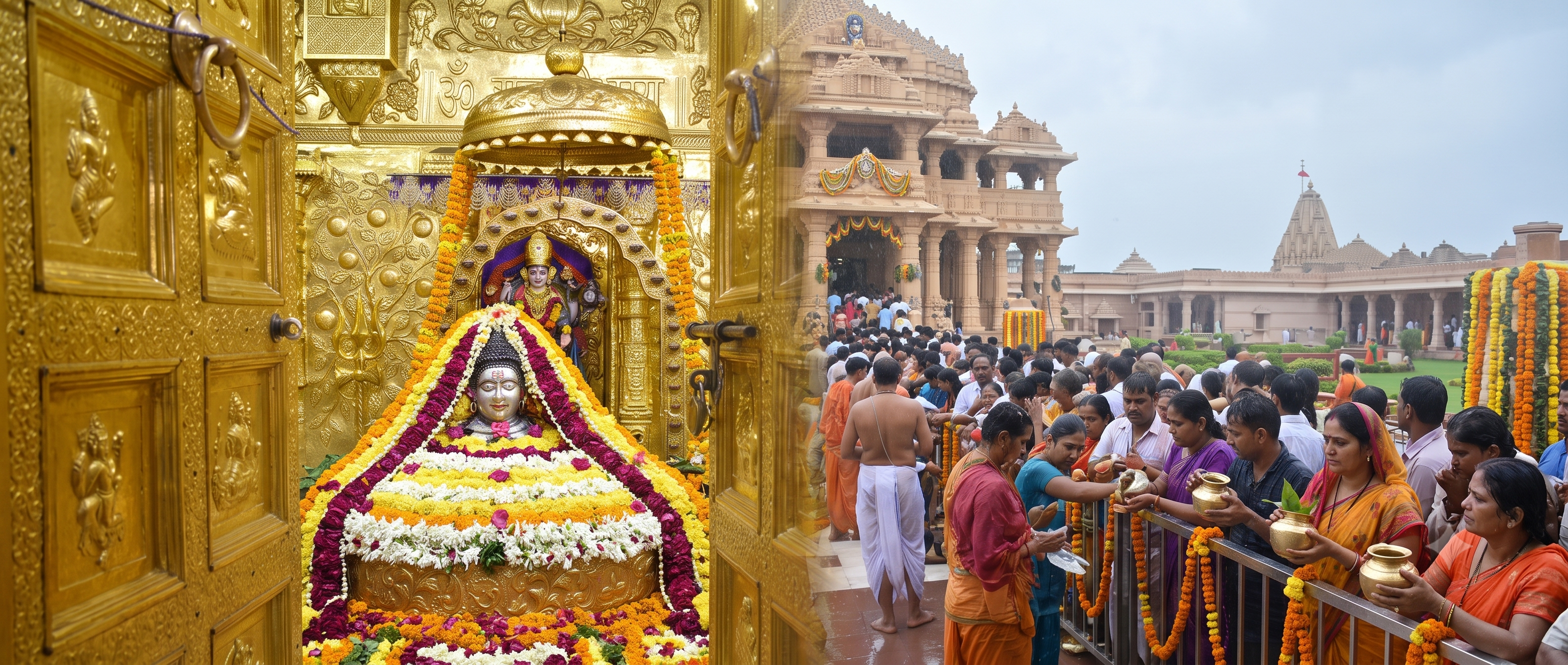
There is a moment, somewhere towards the end of the long summer, when the air begins to change and for millions of Indian households, that shift means one thing: Shravan 2026 is close.
The earth is still warm, the days are still heavy, but somewhere in the distance the clouds begin to gather. Then comes the first rain. The first drops touch the parched ground, and that unmistakable fragrance of wet earth rises into the air. Whether you call it Shravan or Sawan, this is the month that quietly reorganises an entire household around devotion.
It is a month of devotion, fasting and prayer. Mondays are dedicated to Lord Shiv. Temples fill with devotees, bells ring through the morning and homes take on a quieter, more devotional atmosphere. A diya glows beside the Shivling, incense fills the puja room with fragrance and the gentle smoke of dhoop accompanies the evening aarti.
Shravan is not observed in exactly the same way across India. Different regions follow different calendars and traditions, but the spirit remains beautifully similar: devotion, simplicity, discipline and faith.
Here is everything you need for Shravan 2026 — the dates, the stories behind the month, a simple puja routine you can actually follow, the festival calendar, fasting practices and the pooja essentials worth keeping ready.
When Does Shravan 2026 Begin?
This is one of the first questions that comes up every year, and the answer depends on where you live.
The Hindu lunar month is calculated in two different ways. The Purnimanta calendar considers the full moon as the end of the month and is followed mainly across North India. The Amanta calendar considers the new moon as the end of the month and is followed in Maharashtra, Gujarat and several other parts of western and southern India.
That is why Shravan appears to begin on two different dates.
|
Purnimanta Calendar |
Amanta Calendar |
|
|
Shravan Begins |
Thursday, 30 July 2026 |
Thursday, 13 August 2026 |
|
Shravan Ends |
Friday, 28 August 2026 |
Friday, 11 September 2026 |
|
Sawan Somvar |
3, 10, 17 and 24 August |
17, 24, 31 August and 7 September |
Neither calendar is more correct than the other. The date you follow depends on your region, family tradition and local panchang.
For devotees in Maharashtra, Gujarat and other Amanta regions, 13 August 2026 marks the beginning of Shravan. In North India, Shravan begins on 30 July 2026.
One Month, Many Traditions: How Shravan Is Celebrated Across India
The beauty of Shravan is that it brings together different traditions without losing its central spirit of devotion.
North India
In North India, Shravan is closely associated with Sawan Somvar and the Kanwar Yatra.
Every Monday, Shiv temples see large numbers of devotees offering water to the Shivling and observing fasts. The month is also associated with bhajans, temple visits and special prayers.
In parts of North India and other regions, the Shravan period also coincides with celebrations such as Jhulan Utsav, when Radha and Krishna idols are placed on beautifully decorated swings.
Maharashtra and Gujarat
In Maharashtra and Gujarat, Shravan follows the Amanta calendar.
Here, Tuesdays are also significant because of Mangala Gauri Vrat, traditionally observed by married women. The vrat is dedicated to Goddess Gauri and is associated with prayers for family wellbeing and a happy married life.
Shravan in Maharashtra is also a time for community prayers, bhajans and visits to Shiv temples.
South India
Shravan is also an important month in several South Indian traditions, although the way the month is calculated and the festivals observed can differ by state.
Varalakshmi Vratam, dedicated to Goddess Lakshmi, is an important observance in several southern communities. Nag Panchami is another significant festival during this period, celebrated with prayers and traditional offerings.
So while the rituals may differ from one region to another, the atmosphere remains familiar: prayer, fragrance, flowers, light and devotion.
Why Is Shravan So Closely Associated with Lord Shiv?
To understand Shravan, it helps to go back to one of the most well-known stories associated with Lord Shiv.
According to the story of Samudra Manthan, the Devas and Danavs churned the cosmic ocean in search of Amrit, the nectar of immortality.
But before the nectar emerged, something far more dangerous came out of the ocean: Halahal, a deadly poison capable of destroying creation.
To protect the universe, Lord Shiv drank the poison and held it in his throat. His throat turned blue, giving him the name Neelkanth.
The poison caused tremendous heat, and according to tradition, the gods and devotees offered water to Lord Shiv to cool him. This is one of the stories associated with the tradition of offering water to the Shivling, particularly during Shravan.
That simple act of offering water carries a deeper meaning. It is a reminder of compassion, surrender and gratitude towards the deity who protected creation.
There is another story that gives Sawan Mondays their special significance.
In her earlier life as Sati, and later reborn as Parvati, Goddess Parvati is believed to have undertaken intense penance with the desire to be united with Lord Shiv. Her devotion and determination have become deeply connected with the traditions surrounding Sawan Somvar.
For devotees, the fast is therefore not simply about giving up food. It is also about patience, discipline, prayer and focusing the mind.
The Story of Markandeya and the Mahamrityunjay Mantra
|| ॐ त्र्यम्बकं यजामहे सुगन्धिं पुष्टिवर्धनम्
उर्वारुकमिव बन्धनान्मृत्योर्मुक्षीय माऽमृतात् ||
Another powerful story associated with Lord Shiv is that of Sage Markandeya.
According to tradition, Sage Mrikandu and his wife prayed for a child. Lord Shiv granted them a choice: they could have a son who would live a long but ordinary life, or a gifted son whose life would be short.
They chose the latter.
Their son, Markandeya, grew up as a deeply devoted worshipper of Lord Shiv. When the time came for him to die, Yamraj arrived to take him. Markandeya clung to the Shivling and continued praying to Lord Shiv.
When Yamraj's noose was cast, it fell around the Shivling as well.
Lord Shiv then appeared and intervened, saving Markandeya from death.
The story is traditionally associated with the Mahamrityunjay Mantra, one of the most revered mantras dedicated to Lord Shiv. This is one reason devotees turn to Shiv worship and mantra chanting during times when they seek strength, protection and inner peace.
Sawan Somvar 2026: Dates and Traditions
Every Monday during Shravan is considered especially auspicious for the worship of Lord Shiv.
For the Purnimanta calendar followed in North India, the four Sawan Somvar dates in 2026 are:
3 August: First Sawan Somvar
10 August: Second Sawan Somvar
17 August: Third Sawan Somvar
24 August: Fourth Sawan Somvar
The third Sawan Somvar is particularly notable because Nag Panchami also falls on 17 August 2026.
Devotees may observe a vrat, visit a Shiv temple, offer water or milk to the Shivling and perform evening aarti.
Some also begin the Solah Somvar Vrat, observing sixteen consecutive Monday fasts. Practices can vary considerably between families, so it is always best to follow the tradition followed in your home.
A Simple Shravan Puja Vidhi for Your Home
You do not need an elaborate arrangement to make your Shravan prayers meaningful.
A clean space, a few traditional offerings and a few quiet moments of devotion can be enough.
Here is a simple puja routine that many devotees follow.
1. Begin with a bath
Wake up and take a bath before beginning your puja. Many devotees add a few drops of Gangajal to their bathing water as a symbol of purification and then wear fresh clothes.
2. Prepare your puja space
Clean the area where you keep your Shivling or picture of Lord Shiv. Keep the flowers, Bel Patra, diya and other offerings ready.
3. Perform Abhishek
Offer water to the Shivling.
Depending on your family tradition, you may also offer milk, curd, honey and ghee as part of Panchamrit Abhishek, followed by a final offering of clean water.
4. Offer Bel Patra, flowers and fruits
Bel Patra has a special place in the worship of Lord Shiv. Offer fresh Bel Patra along with flowers and fruits.
5. Light a ghee diya
Light a diya beside the Shivling.
The steady flame of a diya has long been associated with devotion, purity and the presence of divine light.
A HEM Aradhana Pure Cow Ghee Diya can become a simple part of this daily ritual.
6. Light incense
As you begin your prayers, light incense and allow the fragrance to gently fill the room.
A floral fragrance such as HEM Fortune Mogra Bambooless Incense can bring a soft, calming fragrance to your morning puja.
Mogra itself is traditionally associated with flowers and devotional offerings, making it a natural choice for a prayerful setting.
7. Light dhoop during the evening aarti
As the day comes to an end, light dhoop during your evening prayer or aarti.
HEM Soham Pure Sambrani Dhoop Cups bring the traditional fragrance of Sambrani into the home and can be used as part of your evening puja routine.
8. Chant a mantra
Om Namah Shivay is one of the most widely recited mantras associated with Lord Shiv.
Devotees may also chant the Mahamrityunjay Mantra. Those who follow a regular practice may use a Rudraksha mala for 108 repetitions.
9. Complete the aarti
End your puja with aarti and share prasad with your family.
The beauty of a daily ritual lies less in how elaborate it is and more in the devotion with which it is performed.
Shravan 2026: Important Festival Dates
For the Purnimanta Shravan calendar, some of the important dates are:
|
Date |
Occasion |
|
30 July |
Shravan Maas begins |
|
3 August |
First Sawan Somvar |
|
10 August |
Second Sawan Somvar and Soma Pradosh |
|
11 August |
Sawan Shivratri and Masik Shivratri |
|
12 August |
Hariyali Amavasya |
|
17 August |
Third Sawan Somvar and Nag Panchami |
|
24 August |
Fourth Sawan Somvar |
|
26 August |
Pradosh Vrat |
|
28 August |
Shravan Purnima and Raksha Bandhan |
The Purnima tithi technically begins on the evening of 27 August, but 28 August is the day observed for both Shravan Purnima and Raksha Bandhan, since that is when the tithi is in effect at sunrise. Festival dates can vary depending on the local panchang and the tradition being followed. For rituals where the exact tithi or muhurat matters, it is best to check the panchang followed by your family or local temple.
The Kanwar Yatra: A Journey of Devotion
Shravan is also the time when one of India's most recognisable pilgrimages takes place: the Kanwar Yatra.
Every year, lakhs of devotees known as Kanwariyas travel on foot to collect sacred Ganga water and carry it back to offer at Shiv temples.
For those who undertake the journey, it is much more than a pilgrimage. Walking long distances, observing discipline and carrying the sacred water becomes an expression of faith and dedication to Lord Shiv.
There are also popular stories and traditions around the idea of carrying water in a kanwar. The story of Shravan Kumar, the devoted son who carried his blind parents on a pilgrimage, is often associated in popular culture with the ideal of filial devotion. However, this is a separate traditional story and should not be treated as the scriptural origin of the Kanwar Yatra.
At its heart, the Yatra represents devotion, endurance and service.
Where Do Devotees Travel During Shravan?
For many devotees, Shravan is also a time to visit some of India's most important Shiv temples.
In Ujjain, the Mahakaleshwar Temple becomes especially vibrant during Shravan, with special processions and celebrations on Mondays.
In Jammu and Kashmir, devotees undertake the Amarnath Yatra, where the Amarnath cave is associated with a naturally formed ice Shivling.
In Gujarat, Somnath Temple, one of the twelve Jyotirlingas, sees devotees offering prayers and performing rituals during the holy month.
For some, Shravan means travelling to a sacred temple. For others, it means lighting a diya in the quiet corner of their own home.
Both can become meaningful expressions of devotion.
What to Eat During Shravan?
Shravan is traditionally associated with simplicity, including in the food people choose to eat.
Many families prefer fresh, light and home cooked meals during the month, while those observing a vrat follow specific fasting foods according to their tradition.
Foods commonly eaten during Shravan:
- Seasonal fruits
- Milk and ghee
- Moong dal
- Khichdi
- Lauki
- Parwal
- Sabudana
- Other light, freshly prepared meals
Foods commonly avoided:
- Heavy and oily food
- Highly processed food
- Onion and garlic, where avoided as part of family tradition
- Non vegetarian food
- Alcohol
Fasting and dietary practices vary from one household to another. There is no single rule followed by everyone, so your family tradition and personal needs should always take priority.
The larger idea behind the Shravan diet is simplicity. It is a way for many devotees to bring a little more discipline to both body and mind during a month centred around prayer.
Shravan Pooja Essentials to Keep Ready
Once the dates are marked on the calendar and your puja routine is decided, the next step is simply to keep your essentials ready.
There is something comforting about knowing that everything is in its place before a Sawan Somvar morning begins.
A diya for light. Incense for fragrance. Dhoop for the evening prayer. Flowers and Bel Patra for offering. And a few quiet moments for yourself.
HEM Shravan Combo — ₹522 (10% off MRP ₹580)
Brings together three everyday pooja essentials:
- HEM Aradhana Pure Cow Ghee Diya — for lighting during your prayers
- HEM Fortune Mogra Bambooless Incense Sticks (180g) — for a soft floral fragrance during morning worship
- HEM Soham Pure Sambrani Dhoop Cups (12 per box) — for the traditional fragrance of Sambrani during evening prayers and aarti
It is built around the simple rhythm of a Shravan day, from the morning diya and incense to the evening dhoop, and doubles as a thoughtful gift for family members observing the month.
HEM Golden Saffron Combo — ₹555 (15% off MRP ₹660)
For those who enjoy a richer fragrance, this combo pairs Golden Saffron incense sticks with matching dhoop sticks. It works well for special prayers, festive occasions and family gatherings through the season.
HEM Madhur Incense and Dhoop Sticks Combo — ₹364 (10% off MRP ₹405)
Brings together six fragrances, including Lemongrass Lemon, Rose Mogra and Sandalwood Patchouli, in both incense and dhoop sticks — ideal for those who like to change the fragrance of their home according to the mood, occasion or time of day.
HEM has been making incense and pooja fragrances since 1983, hand-rolled by artisans and used in homes and spiritual spaces across more than 70 countries.
Frequently Asked Questions
When does Sawan 2026 start?
Shravan begins on 30 July 2026 in North India according to the Purnimanta calendar and on 13 August 2026 in Maharashtra, Gujarat and several Amanta regions.
How many Sawan Somvars are there in 2026?
There are four Sawan Somvars in the Purnimanta calendar: 3 August, 10 August, 17 August and 24 August. In Amanta regions, the Sawan Somvar dates are 17 August, 24 August, 31 August and 7 September.
What should I offer Lord Shiv during Shravan?
Water, milk, Bel Patra and flowers are among the traditional offerings made to Lord Shiv. A diya, incense and dhoop can also form part of the puja and aarti.
Can I observe Sawan Somvar at home?
Yes. Many devotees perform their Sawan Somvar puja at home with offerings, prayer, mantra chanting and aarti. Visiting a temple is not essential if your family tradition allows home worship.
What are the essential pooja items for Shravan?
The basic items include a Shivling or picture of Lord Shiv, Bel Patra, flowers, a diya, incense and dhoop. The HEM Shravan Combo covers the diya, incense and dhoop in one order.
Is Nag Panchami during Sawan in 2026?
Yes. Nag Panchami falls on 17 August 2026, which is also the third Sawan Somvar in the Purnimanta calendar.
Is Shravan celebrated in the same way across India?
Not quite. North India is closely associated with Sawan Somvar and the Kanwar Yatra. Maharashtra and Gujarat observe traditions such as Mangala Gauri Vrat, while several South Indian communities observe Varalakshmi Vratam during this period. The dates and customs may differ, but the underlying spirit remains the same: devotion, prayer, simplicity and faith.
Let Shravan Begin with a Moment of Peace
Perhaps that is what makes Shravan so special.
It does not always ask for something grand.
It can begin with a glass of water offered to a Shivling. A Bel Patra placed with care. A small diya glowing in the morning. The fragrance of incense filling the room. A mantra repeated quietly, one time and then another.
If you are setting up your own puja corner this year, the HEM Shravan Combo carries the diya, incense and dhoop mentioned above in a single order.
Outside, the monsoon continues to wash the earth clean.
Inside, Shravan gives us a reason to pause, pray and begin again.
May this Shravan bring peace to your home, strength to your heart and the blessings of Mahadev to you and your loved ones.
Har Har Mahadev.


