

Total: MRP Rs.0
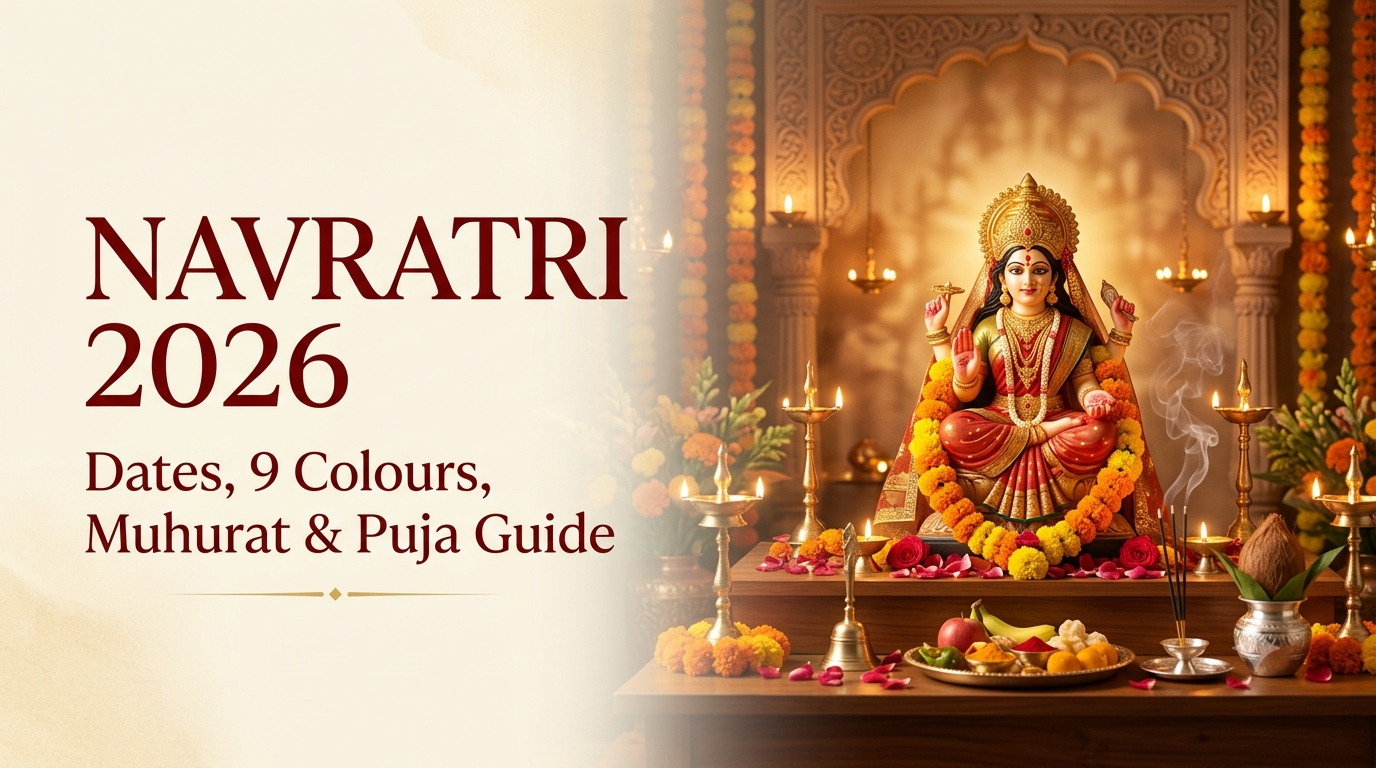
Sharad Navratri 2026 begins on Sunday, 11 October and runs until Monday, 19 October. Vijayadashami (Dussehra) is on Tuesday, 20 October. In Delhi, the Ghatasthapana muhurat on day one is 6:19 am to 10:12 am.
Navratri has a way of slowing a household down. The puja room gets cleaned properly, the evenings get a little brighter, and for nine nights a family finds a shared rhythm around one small flame. This guide covers the dates, the timings, the colour for each day and a step-by-step ritual plan, so you can focus on devotion rather than logistics.
Navratri 2026 dates at a glance
| Event | Date | Notes |
|---|---|---|
| Pratipada and Ghatasthapana | 11 October (Sunday) | Day 1 |
| Durga Ashtami | 19 October (Monday) | As per the Delhi and North Indian calendar |
| Maha Navami | 19 October (Monday) | Same day, due to tithi overlap |
| Vijayadashami (Dussehra) | 20 October (Tuesday) | Day after Navratri ends |
Why Ashtami and Navami fall together: In Delhi, Ashtami begins at 8:27 am on 18 October and ends at 10:51 am on 19 October. Navami starts right after and continues until 12:50 pm on 20 October. That is why many North Indian households observe both on 19 October. In Bengal, Maha Navami is observed on 20 October. Always confirm with your local Panchang or family priest.
Ghatasthapana muhurat (Delhi, 11 October)
- Main muhurat: 6:19 am to 10:12 am
- Abhijit muhurat: 11:44 am to 12:31 pm
Timings shift slightly from city to city, so check your local Panchang.
Why we celebrate Navratri
Navratri honours Shakti, the divine feminine power, through the nine forms of Goddess Durga, together called the Navadurga. They are worshipped in sequence, from Shailputri on day one to Siddhidatri on day nine.
At its heart is the story of Durga and Mahishasura. The buffalo demon had grown so powerful that the gods could not stop him, so their combined energies took form as Durga, who defeated him. It is why Navratri stands for the victory of good over evil. In North India the festival also leads into Dussehra, which marks Lord Rama's victory over Ravana.
Navratri 2026 colours and what each one stands for
The colour of each day follows the weekday on which Navratri begins, so the sequence changes every year. Because 2026 starts on a Sunday, the commonly followed list begins with orange. This is a loved custom rather than a religious rule, and some regions follow different colours.
| Day | Date | Goddess | Colour | What it represents |
|---|---|---|---|---|
| 1 | 11 Oct | Shailputri | Orange | Energy, warmth and enthusiasm |
| 2 | 12 Oct | Brahmacharini | White | Purity and inner peace |
| 3 | 13 Oct | Chandraghanta | Red | Courage and devotion |
| 4 | 14 Oct | Kushmanda | Royal Blue | Calm and depth |
| 5 | 15 Oct | Skandamata | Yellow | Joy, optimism and maternal love |
| 6 | 16 Oct | Katyayani | Green | Growth and new beginnings |
| 7 | 17 Oct | Kalaratri | Grey | Strength and protection |
| 8 | 18 Oct | Mahagauri | Purple | Grace and spiritual fulfilment |
| 9 | 19 Oct | Siddhidatri | Peacock Green | Compassion and fulfilment |
How to perform Navratri puja at home: a simple step-by-step plan
Day 1: Ghatasthapana
- Clean the puja space and spread a fresh cloth.
- Fill a kalash with Gangajal. Many families also add a betel nut and a coin.
- Sow grains such as barley or other seeds in a clay base under the kalash. Their sprouting over nine days is seen as a sign of growth and blessings.
- Light a diya with ghee. In many homes this stays lit through all nine days.
- Cleanse the space with dhoop before you begin the prayers.
Daily morning and evening routine
- Offer fresh flowers, fruit, kumkum and water to the Goddess.
- Light dhoop or incense just before aarti so the fragrance is present when the prayers begin.
- Recite the Durga Saptashati, or chant a simple mantra such as "Om Aim Hreem Kleem Chamundaye Vichche".
- Finish with aarti and prasad.
Doing this at the same hours each day makes it feel less like a task and more like a daily anchor.
Ashtami and Navami: Kanya Pujan
Kanya Pujan (Kanjak or Kanya Bhoj) welcomes young girls as living forms of the Goddess. Invite them home, wash their feet, tie moli on their wrists, serve a meal and offer small gifts. The classic prasad is halwa, puri and chana. In 2026, many Delhi households will do this on 19 October.
Your Navratri puja checklist
A well-stocked puja room makes the nine days smoother. Keep these within easy reach:
- Kalash, coconut, mango leaves, roli and akshat for sthapana
- Gangajal for the kalash and for sprinkling around the space
- A diya and plenty of cotton battis for the unbroken lamp
- Pure ghee for the diya and aarti
- Dhoop such as guggal or sambrani cups for the morning purification
- Incense sticks in soothing scents like chandan, rose or mogra for the evenings
- Camphor, a chunri, flowers and bhog
If you would rather not make several trips to the market, the HEM Navratri Puja Kit gathers the core items in one box: a small brass pyali diya, 100 cotton diya battis, 450 ml of pooja ghee, Gangajal and 12 guggal dhoop cups. Flowers, fruit and bhog are the only things left to pick up fresh.
Navratri fasting: what to eat
There is no single way to fast. Some devotees observe all nine days, some fast on selected days, and others take one meal a day or a partial fast. The rules depend on family and regional tradition.
Commonly eaten: sabudana, kuttu, singhara, samak rice, potatoes, fruits, milk and dairy, nuts and dry fruits. Salt: sendha namak (rock salt) in place of regular salt. Many devotees also avoid grains, pulses, onion and garlic.
How India celebrates
- Gujarat: Garba and Dandiya nights
- North India: Temple visits, jagrans, fasting and Ramlila
- West Bengal and the East: Durga Puja with pandals and idols
- South India: Golu or Bommai Golu, with dolls arranged on tiered steps
FAQs
When is Navratri 2026?
11 October to 19 October 2026. Dussehra is on 20 October.
What is the Ghatasthapana muhurat in 2026?
In Delhi, 6:19 am to 10:12 am on 11 October, with the Abhijit muhurat from 11:44 am to 12:31 pm.
Which colour should I wear on day one?
Orange, followed by white, red, royal blue, yellow, green, grey, purple and peacock green.
When should Kanya Pujan be done in 2026?
On Ashtami or Navami. In the Delhi calendar both fall on 19 October.
What do I need for Ghatasthapana?
A kalash, Gangajal, grains for sowing, a diya with ghee, coconut, mango leaves, roli and dhoop.
Can I fast and still eat during Navratri?
Yes. Fasting usually means vrat-friendly foods such as sabudana, kuttu, singhara, fruits and dairy, not going without food entirely.


